Why Your Link in Bio Should Live on Your Website (Not Linktree)
Why “link in bio” shouldn’t live in someone else’s building.
In a small town, directions still matter. Somebody pulls up on Main Street for the first time—maybe they’ve heard about the food, the art show, the live music, the new build, the place everybody keeps mentioning. They roll down the window and ask the question every business depends on:
“Where do I go?”
You don’t point them to a hallway inside another business and say, “Start there. You’ll find us in the directory.” You walk them to your door. You make it obvious. You make it feel like you. That first step is where people decide whether they trust you. Online, the bio link is that step. And link-in-bio tools have quietly trained a lot of businesses to put their front door in someone else’s building.
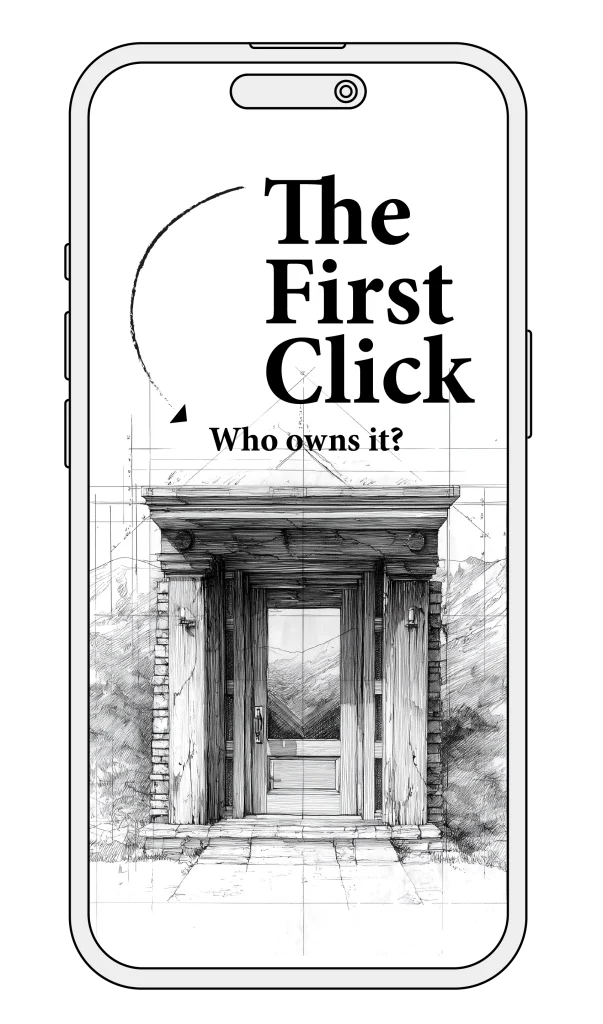
Why Linktree took over (and why the copycats followed)
Linktree didn’t rise because businesses are lazy. It rose because platforms made it harder to share multiple links, and everybody needed a quick fix. One link. Many destinations. Simple. The problem is when a quick fix becomes the default system. A third-party link hub isn’t just “where your links live.” It becomes your:
- first impression
- first click
- first piece of context
- first chance to make the next step feel clear
That’s not a small role. That’s the front door role.
The real leak isn’t “SEO juice.” It’s intent.
Let’s talk plain. Most businesses aren’t losing sleep over link attributes or technical SEO debates. The bigger cost is practical—and you feel it even if you can’t name it.
When your bio link points to a link hub, you leak:
1. The first impression — Instead of landing on your brand, people land on a template. Same layout. Same vibe. Same “button grid” as everyone else. Your business becomes the second impression.
2. The path — Most link pages become a junk drawer: events, shop, menu, blog, contact, YouTube, newsletter, last month’s campaign… all at the same volume. But customers don’t want a list. They want direction.
3. Clean measurement — You can track clicks, sure—but you’ve split the journey before it even starts.
That first click should be the cleanest signal you get from social: “I’m interested.” Why muddy the strongest signal in your funnel?
4. Ownership — This is the big one: you’re routing your best traffic through a place you don’t own, can’t fully shape, and will never control long-term. That’s not strategy. That’s rent.
Where the brand meets the street
Our work has always lived in the overlap of two worlds: the real one—signage, storefronts, wayfinding, places people actually show up—and the digital one—websites, content systems, search, conversion paths. And the rule is the same in both: your first step has to feel like you. If your front door is generic, your business feels generic—no matter how good the work is inside.
If someone clicks your bio link, they’ve already shown interest. Don’t hand that moment to a third-party hallway and ask them to sort through a pile of choices. Put the “welcome mat” on your property—clear, intentional, and built to lead somewhere.
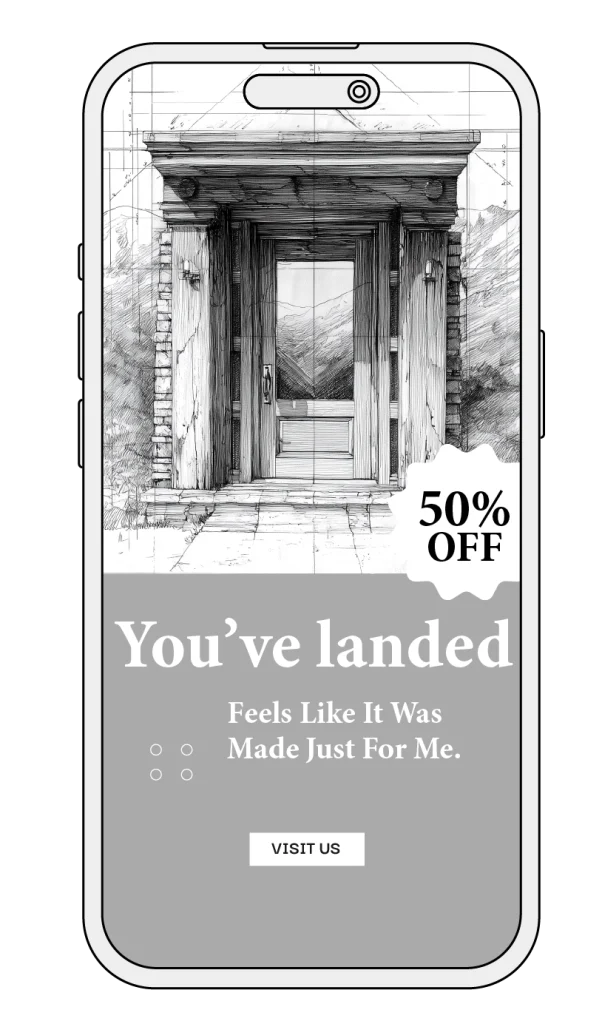
Build your own Bio Hub on your domain
Not a complicated rebuild. Not a months-long project. A single page that does one job well. A branded “bio hub” on your website:
yourdomain.com/linksyourdomain.com/goyourdomain.com/start
We’ll often set it to noindex, too—so it doesn’t compete with your core pages in search. This page isn’t about being “pretty.” It’s about being yours. And when the first click lands on your domain:
- your voice is the first impression
- your proof shows up before the ask
- your tracking fires cleanly
- your offers can be prioritized
- they stay inside your ecosystem
That’s how marketing starts compounding instead of resetting every week.
A Bio Hub shouldn’t be a list. It should be a welcome mat.
The best “link in bio” pages feel like walking into a well-run place. You don’t get hit with twelve options and confusion. You get greeted. You get directed. You feel like you’re in the right spot. A strong Bio Hub is simple, intentional, and ordered.
The structure that works:
- One clear line about what you do (plain English)
- One primary action (the #1 thing you want most people to do)
- Two or three supporting actions (only what matters right now)
- A proof anchor (review, award, press, credibility—something real)
- One capture point (email/text/download/booking—pick one)
That’s it. Not “more links.” Better direction.
The long-game advantage
Link hubs optimize for convenience. Bio hubs on your domain optimize for compounding. Because once your front door is yours, you can:
- keep the same bio URL forever while swapping campaigns anytime
- learn what actually converts (instead of guessing)
- tighten offers, improve proof, and refine the path without retraining your audience
- build a system where every post doesn’t just “get views”—it drives somewhere intentional
That’s the difference between posting and building a system.
The bottom line
If you’re doing the work—creating content, earning attention, building trust—don’t hand off the most valuable moment in the chain. The first click should land where you control the story. On your domain. In your voice. With your proof. With your next step. That’s how you stop sending your best traffic to someone else’s lobby—and start building digital assets that actually hold value.
The front door matters—on Main Street and online. Own it. Then your marketing stops leaking and starts compounding.