What Happens After the Grant?
The Ramey Lot and Southwest Virginia’s Economic Development Test. Evaluating economic development in Southwest Virginia requires looking at what a project makes possible long after the construction money has been spent. Five years after a building opens, someone is still responsible for filling it, maintaining it, and paying its bills. A public space needs care and a reason for people to use it. A business needs customers who return. The people responsible for those things determine whether the original investment continues to serve the community.
Their work deserves a place at the beginning of the plan. When a town acquires property, the temptation is understandable: find an available funding program, identify an eligible use, and get something moving. Vacant property creates pressure. A grant deadline creates urgency. A rendering gives everyone something to rally around.
The danger comes when those conditions begin to substitute for a clear purpose. A project can become increasingly detailed while its economic reasoning remains thin.
If the strongest argument for building something is that funding is available, the planning is incomplete.
Public funding can make difficult, worthwhile projects possible. It can address conditions that prevent private investment and help communities provide spaces and services their residents need. But securing construction money does not establish demand, operating capacity, or a durable source of support. Those require their own work.
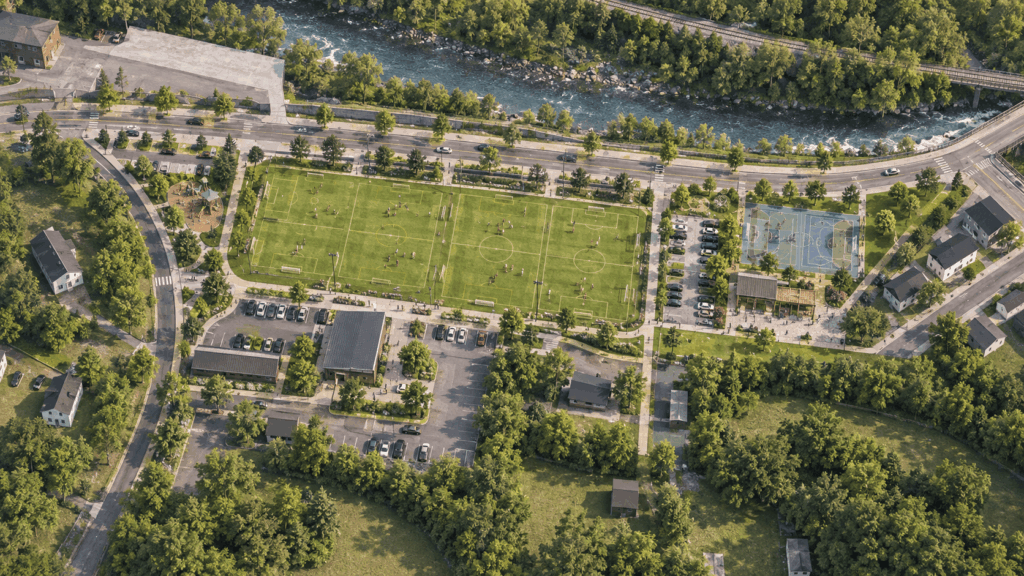
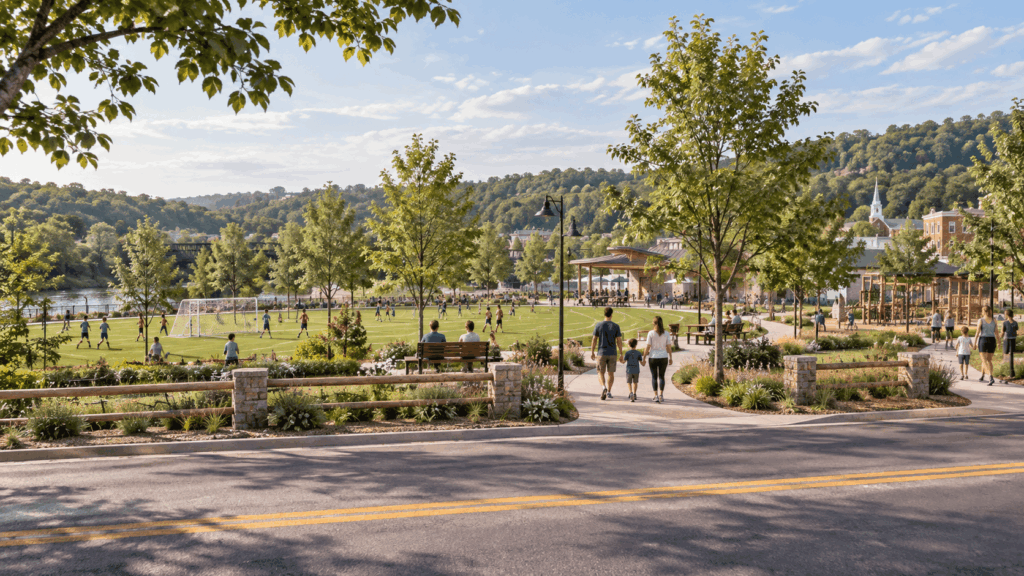
Here in Tazewell, the proposed redevelopment of the Ramey lot presents a particularly useful test. The property is owned by the Town of Tazewell’s Industrial/Economic Development Authority. At the July 6, 2026 joint meeting of Town Council and the I/EDA, Scheme C emerged as the preferred concept based on current feedback, with a walking path and flexible areas capable of supporting soccer, T-ball, pickleball and community events. The Town describes the plans as preliminary and identifies grant procurement, engineering assessments, construction plans and eventual construction as the next phases. Town of Tazewell
There is a legitimate recreational need. Earlier this year, the Town reported 182 children participating in its youth soccer program. And in the Town’s own comprehensive-planning discussion, the proposed “Gateway Park at the Ramey Lot” is identified under Public Amenities & Recreation, with goals that include removing blight, creating space for activity and wellness, and improving youth athletics. Those are reasonable public objectives.
But they raise a second question that should not be lost: what is the long-term economic-development purpose of property held by an Industrial/Economic Development Authority?
That does not mean the answer must be commercial development. A park does not need to charge admission to justify its existence. Children need places to play, families need places to gather, and removing blight has value. But before this particular property moves from conceptual drawings into grant applications, engineering and construction, the community should be able to see the alternatives considered, the expected annual operating and replacement costs, the responsibility for maintaining it, and why this use represents the best long-term role for the property.
If economic development is part of the justification, that mechanism should be stated just as clearly. What new economic activity is expected to occur because the park exists? What private investment could follow? What additional spending or tax-base growth is expected rather than simply moving existing activity from one place in town to another? Those questions do not argue against the park. They establish what the project should eventually be measured against.
Virginia’s Industrial Revitalization Fund offers a useful benchmark for this kind of redevelopment planning. Its guidance asks applicants for evidence of economic viability, plans for recruiting users, an anticipated operating budget, revenue sources, and management responsibility. Those questions are not unique to one grant program. They are basic questions of development planning, and they should also be understandable to the people whose community will live with the result. Virginia DHCD grant manual
The quality of the answers matters. An attendance estimate needs a basis. A projected tenant needs a plausible business. An operating budget needs to account for routine upkeep and eventual replacement. A plan that depends on volunteers should explain the work involved and who will carry it when the original organizers step away.
For commercial projects, this is where the knowledge of people already doing business becomes essential.
A restaurant owner understands what it takes to staff a quiet weekday. A farmer understands the difference between enthusiasm for local food and a buyer who places dependable orders. A builder knows how material choices affect both construction costs and maintenance. An event producer understands the work required to turn an available space into an experience people will pay to attend.
That knowledge should help shape the project brief before drawings and promises become difficult to change.
It also helps communities distinguish new economic activity from activity moved down the street. Before proposing another venue, establish what existing spaces cannot accommodate. Before projecting visitor spending, explain why people would make an additional trip or stay longer. Before building speculative commercial space, investigate likely users, achievable rents, and the cost of carrying it while recruitment continues.
Development involves uncertainty. Good strategy makes the assumptions visible and establishes what evidence would justify the next commitment.
For Southwest Virginia, another question deserves equal attention: how much of the value created will remain here?
Consider a visitor who books a locally owned room, eats at a restaurant buying from area farms, and purchases work made by a local craftsperson. The opportunity extends across several businesses. Each connection still requires a product people want, dependable delivery, and enough margin to keep operating. Putting businesses on the same map does not establish those relationships. Someone has to develop them.
The same thinking applies beyond tourism. Housing construction can create opportunities for local trades and suppliers. A manufacturer can support nearby businesses when they have the capacity to meet its requirements. An established employer can become more valuable to its surroundings when smaller firms have a practical path into its purchasing.
Tourism is part of that larger economy. It must connect with the needs of people who live here throughout the year: housing they can afford, work they can build a life around, and opportunities to own something themselves.
Regional strategy should make those connections practical. That includes understanding purchasing requirements, helping businesses reach customers, and identifying the constraints that prevent capable local people from participating.
My perspective comes from roughly thirty years in strategic marketing and design, including work presenting developments before they were built. I have helped communicate places that existed as plans, drawings, and an intended experience. That work requires understanding who the development is for, what makes it compelling, and what someone needs to believe before taking the next step.
A strong presentation can help a project earn attention and support for its next phase. Its credibility comes from connecting the envisioned future to the work required to deliver it. Proposed imagery can show the ambition clearly while explaining what exists today, what is planned, and what may change.
That is why brand and marketing decisions belong early in development. They help clarify the audience, the promise, and the experience the project must deliver. Architecture, signage, websites, programming, and daily service all influence whether that promise holds together.
Through Blevins Creative Group, Luther Taylor, Haus of Taylor, Mason Dixon Brothers, and the continued development of Ruakh, we are applying that thinking to work that carries our own names, investment, and responsibility. Original art, restored spaces, hospitality, and physical craftsmanship give us opportunities to test the connections ourselves. They also make us answerable for the distance between what we present and what we deliver.
I want Southwest Virginia to expect that same clarity from every development proposal, including ours. Show the purpose. Explain the choices. Identify who will do the work and how it will be supported. Give people a credible picture of the future, with practical steps toward it.
Before we commit a community’s land, money, and confidence, we should be able to explain how the place will work after the funding is spent.
