The Fall of Social: How AI Is Diluting Brands and Draining the Feed
The fall of social media is not because people stopped wanting connection. It is weakening because the public feed is getting crowded with things that look finished, but were never really made. That distinction matters.
The numbers are starting to show it. Ofcom’s 2026 research found that only 49% of adult social media users say they actively post, share, or comment, down from 61% in 2024. In other words, people are still on the platforms, but fewer are participating in the old social way. They are watching more, posting less, and moving through the feed with a lot more caution.
At the same time, the center of gravity is shifting away from the public feed and toward private sharing. Meta says messaging is now the most popular way to share photos and videos on Instagram, and that Reels are reshared more than 4.5 billion times a day across Meta platforms. Sinéad Bovell makes a related point in her writing: AI agents and voice interfaces are starting to break the old habit loop of opening an app and drifting into a feed. That does not mean people stop connecting. It means the public feed matters less than it used to.
That is where this article needs to be precise. The problem is not AI by itself. The problem is misuse. The problem is brands handing over voice, taste, judgment, and timing to a system that can generate language but cannot tell whether the work is any good.
And the platforms know they have a problem. AP reported in January that TikTok says it has labeled at least 1.3 billion videos as AI generated. Days ago, AP also reported that YouTube is facing pressure from 135 organizations and around 100 individual experts over the spread of low quality AI generated videos for children. When the major platforms are actively adding controls, labels, and policy responses to synthetic content, that is not a fringe complaint. That is the market admitting the feed is getting clogged.
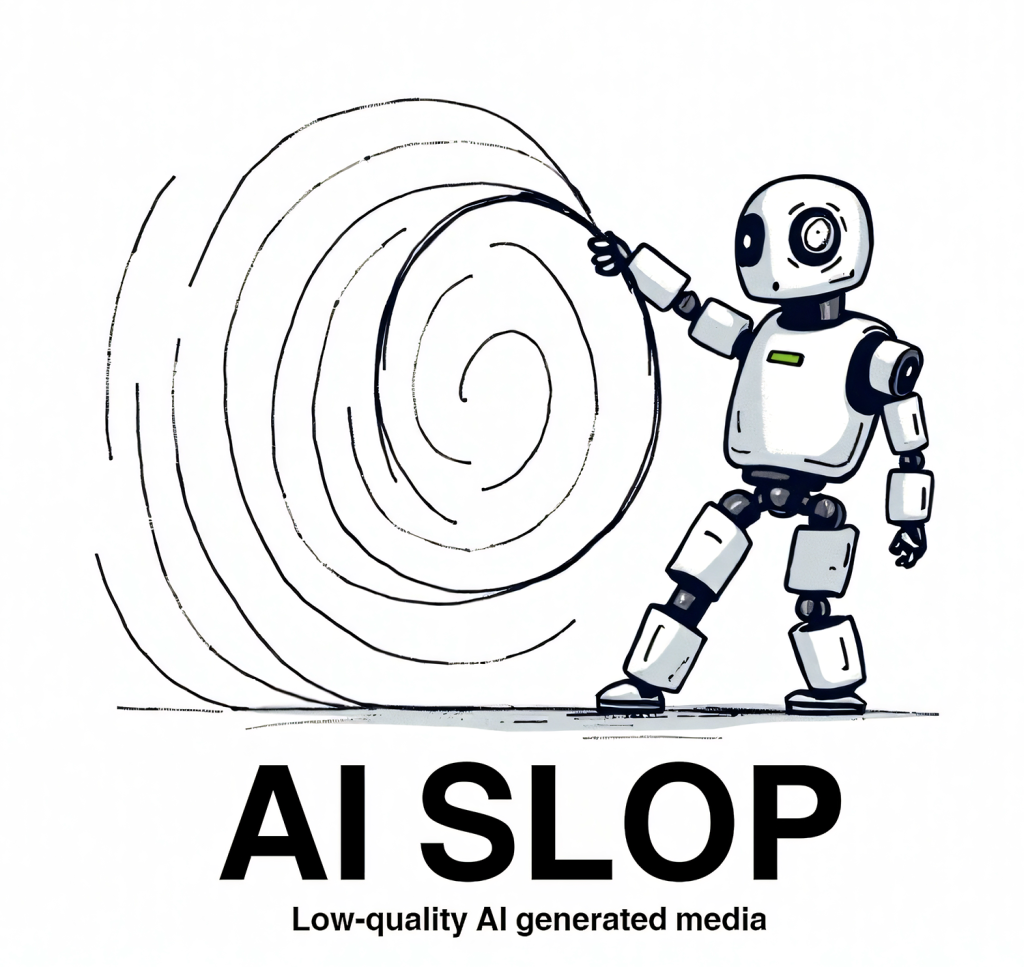
That clog has consequences for brands.
When everybody uses the same tools the same way, everything starts to flatten out. Captions lose fingerprints. Visuals get slick and generic. Tone gets optimized into mush. A business can stay active on paper while becoming forgettable in practice. That is brand dilution, and AI is accelerating it for anyone using it without standards.
You can see the trust issue showing up in audience research. Sprout Social reports that Gen Z’s top complaint about brand AI use is unlabeled AI content, and says 56% are more likely to trust brands that commit to publishing content created by humans. Emplifi’s 2025 consumer survey reached a similar conclusion in plainer language: authenticity is everything, and trust is central to how people respond to brands on social. These are marketing surveys, not gospel, but they point in the same direction as the broader usage data. People are getting harder to fool, not easier.
There is another layer here that matters, especially for younger users. Pew found in February that 64% of U.S. teens say they have used AI chatbots, including 16% who say they have used them for casual conversation and 12% who say they have used them for emotional support or advice. Pew also found that one in ten teens say chatbots help with all or most of their schoolwork. That does not prove social collapse by itself, but it does show how quickly expression, conversation, and judgment are being offloaded to machines.
That is why so much of social feels less social now. You are surrounded by content, but a lot less of it feels inhabited. The feed is full, but the signal is weak.
And brands are making a costly mistake when they treat that environment like a volume game. The answer is not to produce even more filler. The answer is to give people a reason to stop scrolling in the first place.
That usually comes back to proof.
Real work.
Real places.
Real language.
Real decisions.
Real opinions.
Real standards.
When a brand’s digital footprint outruns its proof footprint, people feel the gap. They may not say it out loud, but they know when the voice is borrowed, when the photography feels fake, and when the copy was generated before anyone decided whether it was true. In a synthetic environment, reality stands out faster.
That is also where AI has a very real limit. AI can help research, sort notes, build outlines, tighten drafts, and speed up production. It can be useful. It can even be sharp in places. But it does not know when a sentence is dead. It does not know when an image feels cheap. It does not know when a post sounds like everybody else. It does not know when to stop. Those are judgment calls, and judgment is still the whole ballgame.
So the fall of social is not some dramatic overnight crash. It is a thinning out.
A thinning of presence.
A thinning of trust.
A thinning of originality in the public feed.
People are still online. They are still sharing. They are still looking for signal. But they are posting less in public, relying more on private channels, and getting more skeptical of synthetic content in the feed. That part is not a theory anymore. The data is catching up to the feeling.
The brands that hold their ground in this era will not be the ones that automate the most. They will be the ones that still sound like somebody is actually there.