30 Years in the Work: Before Placemaking Had a Name
Some proof points do not look important until you see them from a distance.
As Blevins Creative Group, Inc. celebrates 30 years in business, we are looking back at a few pieces of work that helped shape how we think, build, and serve. Not as nostalgia. Not as a highlight reel. As evidence.
Evidence that the work has always had a pattern.
Long before placemaking became the language of downtown studies, tourism plans, mixed-use developments, and economic strategy, we were already learning how place becomes value.
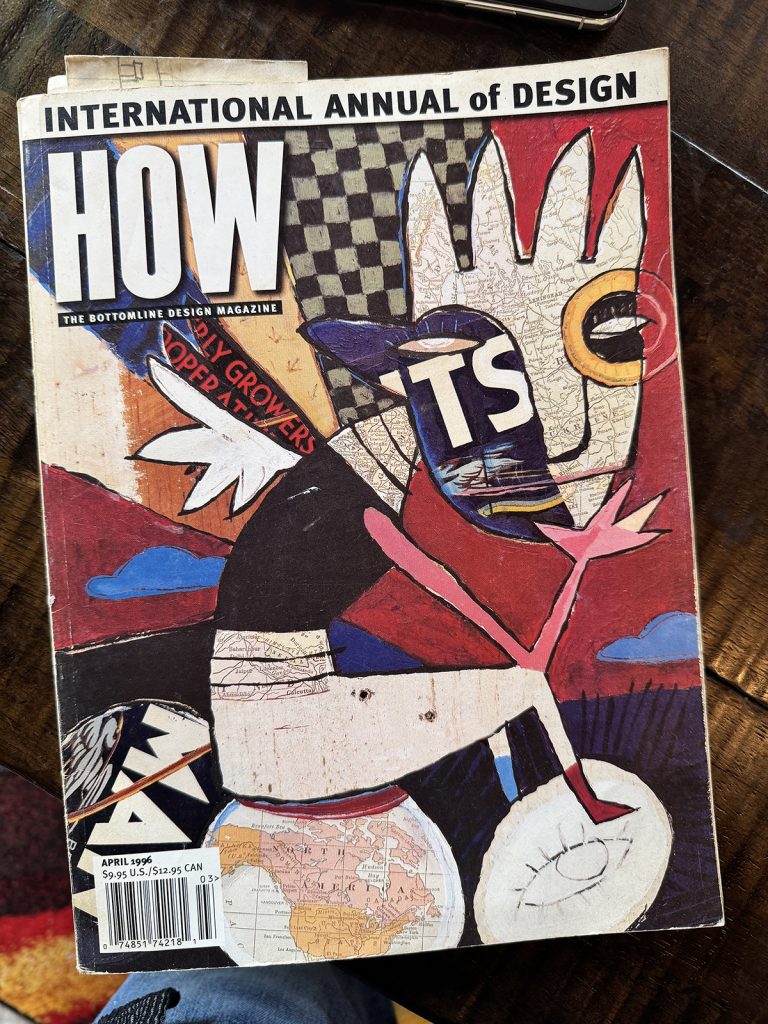
One early example came in 1996, when our founder, Michael Blevins, was recognized in HOW Magazine’s International Design Annual for work marketing the I-40 Association’s economic development partnership.
That was eight years after he left Southwest Virginia to attend the Art Institute of Atlanta.
At the time, it was a respected design recognition in one of the commercial design industry’s leading publications. The HOW brand began as a print magazine in 1985 and served the business, creativity, and technology needs of creative professionals for decades. (HOW Design Leadership conference)
Looking back now, the recognition matters for another reason.
The work was already about place.
The Architecture Was Always There
Before graphic design became the path, there was another pull for our creative founder: architecture.
That instinct still makes sense.
Architecture is about structure, movement, proportion, material, entry points, experience, and how people feel inside a built environment. Good commercial strategy asks many of the same questions.
Where does someone enter the story?
What do they see first?
What supports the decision?
What creates trust?
What gives the place order, memory, and meaning?
In time, the tools changed. The work moved from buildings to brands, from floor plans to identity systems, from physical structures to marketing systems. But the original impulse stayed the same.
Make the place make sense.
That has been a quiet thread through 30 years of Blevins Creative Group.
The I-40 Association Was Place Marketing
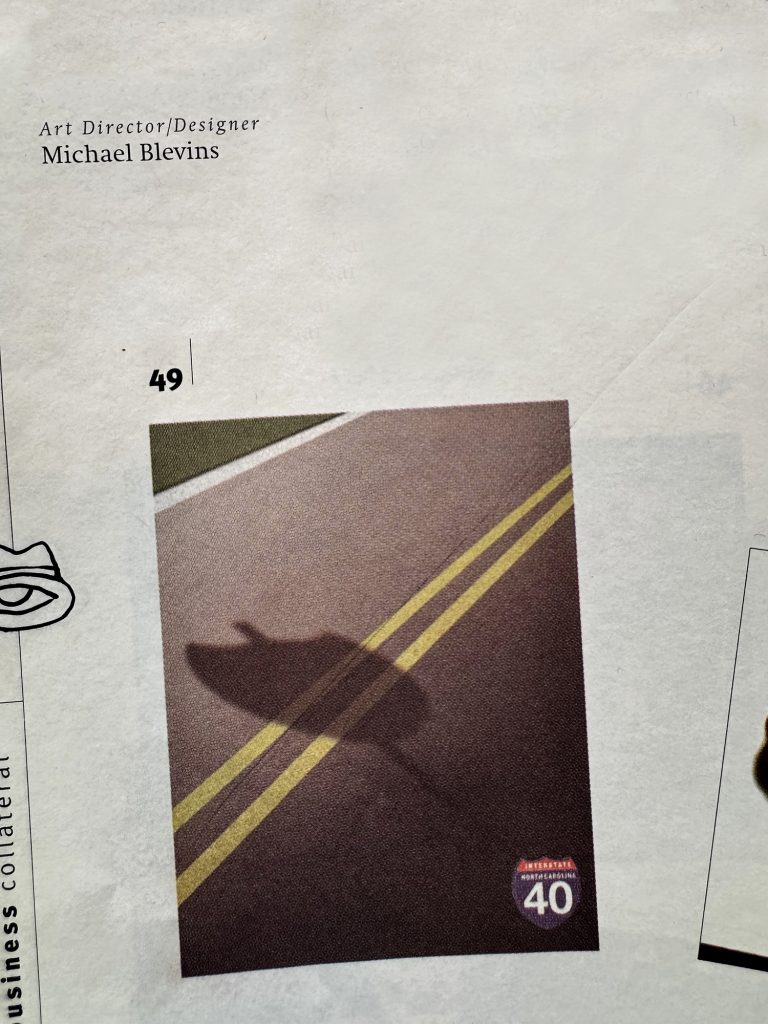
The I-40 Association project was not decoration. It was not design for design’s sake.
It was economic development marketing.
It was the work of helping a corridor tell a clearer story about access, location, workforce, business growth, and opportunity. In that kind of assignment, design has to carry weight. It has to organize information. It has to help a region be understood by people who may never see the place in person until long after the first impression has already been formed.
That is still one of the most overlooked truths in economic development.
A place can have real assets and still struggle to explain itself.
A town can have history, buildings, land, people, traffic, culture, and potential, but without a clear story, much of that value stays invisible. The role of branding is not to invent the value. The role is to uncover it, shape it, and make it easier for others to believe in.
That was the lesson. And it never left.
What the I-40 Story Is Today
The corridor story continues today through the I-95/I-40 Crossroads of America Economic Development Alliance, which promotes economic growth in Southern Johnston County and Eastern Harnett County, North Carolina. The Alliance works with the State of North Carolina, the Town of Benson, the City of Dunn, and the Town of Four Oaks, with a focus on workforce development, site identification, site preparedness, and marketing. (Crossroads of America EDA)
The Alliance supports business growth in and around Benson, Dunn, and Four Oaks, emphasizing the region’s access along Interstate 95 near its intersection with Interstate 40.
That context is important.
The 1996 work was connected to a real economic development idea: corridors matter. Access matters. Location matters. The way a place presents those assets matters.
That is not a small design lesson. That is a business lesson.
The Pattern Became the Company
Over the years, that same way of thinking carried into work for developers, communities, hospitality brands, tourism destinations, and regional businesses.
It showed up in flagship apartment communities for companies like NorthView Partners. It showed up in award-winning neighborhoods and developments for clients from Maryland to Florida. It showed up in websites, campaigns, signage, naming systems, sales materials, and place-based brand strategy.
Different clients. Different markets. Different budgets. Same core discipline.
Find the real value.
Clarify the story.
Build the system.
Make the place easier to understand, remember, and trust.
That is why the 1996 HOW recognition still belongs in the Blevins Creative story. It was an early sign of work that would later become central to the company’s identity.
Not design as surface.
Design as structure.
Design as economic language.
Design as a way to help places compete.
From Southwest Virginia, Outward, Then Back With Sharper Eyes
There is a certain clarity that comes from leaving a place, building elsewhere, and then looking back home with experience.
Southwest Virginia shaped the beginning. Atlanta sharpened the training. Raleigh, North Carolina, created the momentum. Decades of development and commercial strategy added the proof.
Now, that experience feeds directly into Blevins Creative Group’s work across Southwest Virginia and beyond. The focus is still place, but the application is wider: downtown business, tourism, hospitality, restaurants, overnight experiences, rural development, signage, digital presence, and brand ecosystems that help small businesses and communities become more visible.
The work has never been about making something appear bigger than it is.
It has been about helping people see what is already there.
Thirty Years in the Work
This is why we are telling these stories during our 30th year.
Not to look backward too long.
Not to polish old trophies.
Not to make the company history sound larger than life.
The point is simpler than that.
The work has roots.
The way we think about brand, place, development, tourism, signage, websites, and economic momentum did not appear overnight. It came from years of listening, building, testing, presenting, naming, positioning, and learning what helps a place move from potential to belief.
The 1996 I-40 Association project is one early proof point.
Before placemaking became the word, the work was already there.
And 30 years later, it still is.
Blevins Creative Group, Inc.
Where Brand Meets the Street.