Rural Business Strategy: The Challenge No One Can Afford to Ignore
Why Rural Business Strategy Has Changed
Rural business strategy has changed because the way people find, compare, and choose local businesses has changed. Rural business still depends on hard work, reputation, craft, and trust, but today those strengths need a better way to reach the customer.
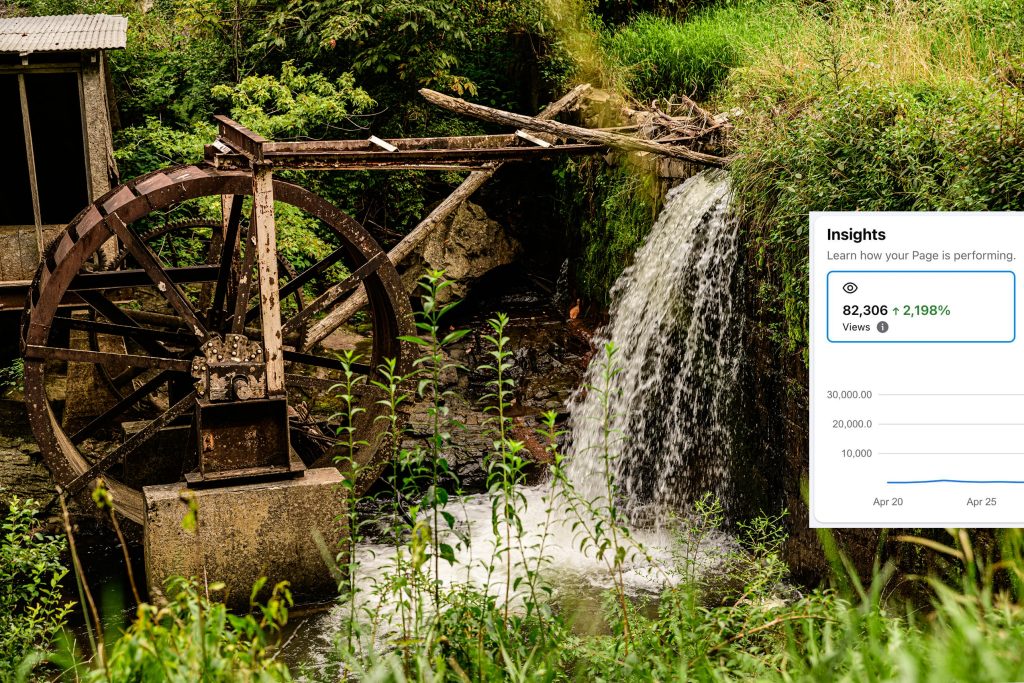
A broken water mill tells a simple truth. The wheel may still be there. The structure may still stand. The craft, the purpose, and the possibility may all remain. But if the water no longer reaches the wheel, the energy is lost. The mill sits still.
That is not far from what is happening inside many rural businesses.
The business itself may not be broken. The owner may work hard. The product may be good. The service may be honest. The equipment may be capable. The building may be renovated. The reputation may still matter to the people who already know it.
But if the flow of visibility never reaches the customer, the energy is lost before the business has a chance to move.
That is the rural business challenge no one can afford to ignore.
You can see it most clearly on Main Street, but it reaches far beyond the storefront. It reaches contractors, builders, makers, restaurants, galleries, overnight stays, repair services, farms, tradespeople, family-owned companies, and the people trying to build something durable in small towns.
For years, the conversation around rural business has leaned heavily on sentiment. We talk about resilience, grit, community pride, hard work, shopping small, and keeping downtown alive. All of that matters. In many towns, it is the reason businesses keep going when the numbers say they should have stopped.
But research is beginning to confirm something many of us have been seeing in the field for years. Heart alone does not keep a business healthy. A good product does not guarantee growth. A storefront does not create demand by itself. A truck, machine, kitchen, renovated building, sign, or beautiful inventory only matters if the right people know it exists, understand its value, and trust the business behind it.
The wheel matters. But so does the flow.
What Rural Business Research Is Starting to Show
Main Street America’s Spring 2026 Small Business Survey drew from 2,421 small business owners across all 50 states, the District of Columbia, Puerto Rico, and the U.S. Virgin Islands. Nearly half of those respondents, 48 percent, came from rural or micropolitan areas, which makes the survey especially useful for communities like ours. The research showed slow, steady recovery from a low point in 2025, but it also showed that different kinds of businesses are facing different kinds of pressure. mainstreet.org
Legacy businesses remain deeply important to their communities. Main Street America found that 258 respondents described their businesses as historic or legacy businesses. Over 60 percent of those legacy business owners described their businesses as destinations that draw customers from outside the community. About 45 percent described their business as a champion of the local economy, and 43 percent described it as a community gathering space or third place. mainstreet.org
Those numbers matter. Legacy businesses carry memory. They carry relationships. They carry a kind of trust that cannot be manufactured overnight.
But the same research also showed pressure. Over 46 percent of legacy businesses reported declining revenue, compared with 41 percent of non-legacy businesses. Only 17 percent of legacy businesses reported increasing profits, compared with 22 percent of non-legacy businesses. mainstreet.org
That should get our attention.
It does not mean older businesses are failing because they are old. It does not mean younger owners automatically understand business better. But it does suggest that business age, owner mindset, marketing habits, customer behavior, and adaptation are connected.
The same Main Street America research identified 396 “thriving businesses” that had increasing revenue and increasing profits over the previous six months. Those businesses represented about 16 percent of respondents. They tended to be newer, with a median launch date of 2021 compared with 2018 for respondents overall. The report also noted that thriving business owners were adaptive, focused on market opportunities, and attuned to data. mainstreet.org
That is not fluff. That is a signal.
The Bureau of Labor Statistics gives the larger context. Of private-sector business establishments born in March 2013, only 34.7 percent were still operating in March 2023. In plain English, roughly one out of three survived for a decade. The sharpest survival drop happened in the first year. Bureau of Labor Statistics
That should shape how we talk about rural business strategy.
Starting a business is not the same as building a business. Opening the doors is not the same as creating a market. Buying the equipment is not the same as building demand. Having a Facebook page is not the same as having a customer acquisition system. Telling a business owner to post more is not a strategy.
Where Rural Business Strategy Often Falls Short
This is where many research reports are useful, but incomplete.
The studies do a good job identifying the symptoms. They tell us businesses are dealing with rising costs, softer customer spending, staffing pressure, financing challenges, digital gaps, and uncertainty. The Federal Reserve’s 2026 Small Business Credit Survey found that 60 percent of employer firms applied for financing in the 12 months leading up to the survey. The most common reasons were operating expenses and expansion or new opportunity. Only 42 percent of applicants received the full amount they sought. Fed Small Business
Those findings matter. They help lenders, towns, business owners, and economic development leaders understand the pressure more clearly.
But after the data, the language often gets careful. We hear words like support, resources, ecosystems, technical assistance, capacity building, and deeper engagement. Those are not wrong words. They are just not enough by themselves.
A rural business owner does not need another vague promise of support. They need to know what to do next.
They need to know why the phone is not ringing. They need to know why people compliment the business but do not buy. They need to know why a social media post got attention but created no traffic. They need to know why someone searched for their service and found a competitor two counties away. They need to know why the business looks successful in person but invisible online.
That is the gap.
The research names the pressure. The solution has to build the system.
Rural Business Visibility Is the Missing Flow
In rural business, we often see a very practical kind of thinking. A business owner will spend $190,000 on an earth-moving machine because the value feels obvious. The machine is real. It is heavy. It can be financed. It can be parked, photographed, and put to work.
But here is the harder question: can the market find the business that owns it?
Can a customer understand what kind of jobs that business wants? Can a contractor, developer, municipality, farmer, or property owner see proof of past work? Can the business show up when someone searches for excavation, grading, site preparation, drainage, driveway repair, land clearing, or development work in its service area? Can the business explain why it is worth choosing over the next operator with a machine?
The equipment creates capacity. The brand, website, search presence, reviews, content, photography, case studies, and follow-up system create demand and trust. Both matter.
But too many rural businesses invest heavily in capacity while treating visibility as optional. That is a dangerous imbalance.
The same is true for restaurants, shops, galleries, builders, makers, lodging properties, and service businesses. A renovated space does not automatically create traffic. A good product does not automatically create trust. A full inventory does not automatically create demand. A strong skill set does not automatically help a stranger understand why you are the right choice.
This is not a criticism of hard work. It is a recognition that the marketplace has changed.
A mill can be built well and still sit still if the water never reaches the wheel. A business can be good and still struggle if the message never reaches the customer.
The Phone Is the New County Paper

There was a time when word of mouth carried much of the load. A good reputation, a good location, and a few strong relationships could keep a business alive for years. In many small towns, those things still matter. Reputation still matters. Local trust still matters. Relationships still matter.
But word of mouth now has a second step. Someone hears your name. Then they search.
They look for your website. They check your Google profile. They scan photos. They read reviews. They look at your social media. They compare you to someone else. They decide whether the business feels current, credible, active, clear, and trustworthy before the first conversation ever happens.
The phone is the new county paper. It is where people discover, compare, verify, and decide. It is where the local story travels beyond the people who already know it.
The old paper carried the story across the county. Today, the phone carries the story across counties, across states, and across the world.
That is why rural businesses cannot treat their website, Google presence, reviews, photography, social content, and analytics as extras. Those are the new circulation routes. They are how the story travels now.
The question is not whether word of mouth still matters. It does. The question is whether your business is ready for what happens after someone hears your name.
Why Broadband Alone Is Not Rural Business Strategy
The rural digital divide adds another layer to this problem. The Cleveland Fed has pointed to broadband access, digital skills, and technical support as real challenges for rural small businesses. Its research summary notes that rural small businesses with annual revenues under $100,000 were especially prone to having trouble using technology compared with larger rural firms. Cleveland Fed
Broadband matters. But broadband alone is not rural business strategy.
A business can have internet access and still have no clear message. It can have a Facebook page and still have no search presence. It can have a website and still fail to explain what it does. It can have customers and still fail to capture reviews, document proof, or build a repeatable path for the next customer.
Digital access is infrastructure. Digital strategy is what turns that infrastructure into business growth.
At Blevins Creative Group, we have watched this shift happen over nearly three decades. We have seen businesses believe social media alone was enough. We have seen others treat a website like an online brochure instead of a business tool. We have seen owners spend heavily on interiors, equipment, inventory, trucks, kitchens, signs, and renovations while leaving their digital footprint weak, outdated, or confusing. At Blevins Creative Group, rural business strategy begins with clarity, visibility, and proof.
We have also seen what happens when the pieces begin to work together.
When the message gets clear, the website becomes useful, the content starts answering real customer questions, the photography proves the promise, and the analytics show what people are actually doing, the business starts to see itself differently. That is when marketing stops being guesswork.
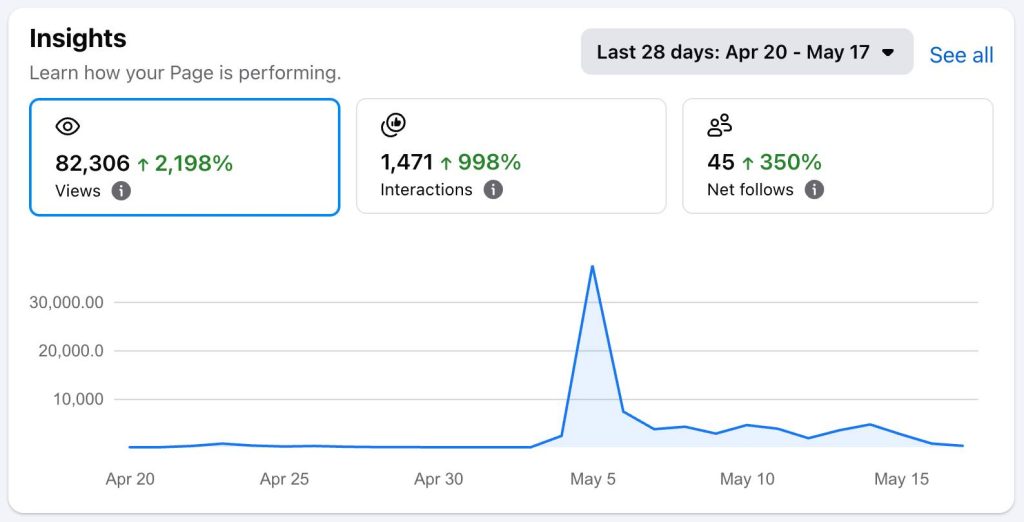
Our own analytics keep telling the same story we have been preaching. Organic search brings different behavior than casual social traffic. Useful content keeps people engaged longer. Clear pages help visitors understand what to do next. A stronger Google presence supports discovery. Social media performs better when it connects back to a deeper system instead of floating on its own.
That is the part many businesses miss.
Social media is not the foundation. It is a signal.
A website is not decoration. It is infrastructure.
Analytics are not vanity numbers. They are evidence.
Content is not filler. It is how a business teaches the market what to understand, value, and remember.
A Stronger Rural Business Strategy Builds Flow
A working rural business strategy is not a logo. It is not a website by itself. It is not a social media calendar. It is the connected system of message, offer, proof, place, platform, customer experience, follow-up, and measurement.
For a restaurant, that may mean the food, atmosphere, music, photography, website, event calendar, reviews, search terms, and story all work together.
For a builder, it may mean the process, portfolio, neighborhoods, client expectations, project photography, search visibility, and trust signals all point to the same promise.
For a rural contractor, it may mean the machine, service area, project documentation, before-and-after proof, Google visibility, referral network, and estimate process all support one clear value.
For a gallery, maker, or small-scale producer, it may mean the product, story, place, online shop, event calendar, artist proof, photography, and visitor experience become one connected path.
For an overnight stay or tourism experience, it may mean the room, view, story, booking platform, reviews, search terms, photography, local recommendations, and guest experience all strengthen one another.
That is where rural businesses can become stronger. Not by copying competitors. Not by chasing every trend. Not by posting louder. By building clarity that people can find, feel, and trust.
The point is not to replace the mill. The point is to restore the flow.
Rural Business Research Should Lead to Action
The reports are useful. They tell us businesses need support. They tell us rural entrepreneurs face pressure. They tell us some businesses are adapting faster than others. They tell us digital tools, customer access, technical help, financing, and stronger ecosystems matter.
But the next step is where the real work begins.
Who is helping the business clarify its offer? Who is fixing the website? Who is improving the Google profile? Who is writing the search-friendly content? Who is documenting the proof? Who is reading the analytics? Who is connecting social activity back to web traffic, inquiries, bookings, calls, purchases, and real customer behavior?
Who is helping the owner understand that marketing is not noise, but infrastructure?
That is where strategy becomes visible.

Rural businesses are not short on effort. They are not short on pride. They are not short on talent. Many are short on clarity, visibility, proof, and measurement. In today’s economy, those things are no longer optional.
A business can be loved locally and still be hard to find. It can have great work and still fail to show proof. It can have loyal customers and still miss the next generation. It can have the right equipment and still lose the job to a competitor with a clearer presence. It can have a beautiful storefront and still be invisible to the visitor planning a weekend from two hours away.
That is why rural business strategy has to become more complete.
A stronger rural business strategy does not replace hard work, reputation, craftsmanship, or local relationships. It gives those things a better way to travel. It helps the right people find the business, understand the offer, see the proof, and take the next step with confidence.
Business support in rural communities should not stop at encouragement. It should help owners build the practical systems that make growth possible: a clear message, a credible website, a strong search presence, a healthy Google profile, useful content, proof through photography and reviews, social media that connects to the larger strategy, and analytics that show what is actually working.
The businesses that survive are usually the ones willing to learn which tools still work, which tools have changed, and which tools they cannot afford to ignore.
The research is catching up to the reality. Now rural businesses need the discipline, strategy, and systems to act on it. The problem is not always the mill.
Sometimes the problem is that the water never reaches the wheel.